In-recovery identity crisis

I’m in the middle of an identity crisis. For 5 years beginning in 2011, I was sick with an diagnosed autoimmune thyroid disorder. For 5 years, by the end of the day, I was not the person I was in the morning. I battled sleepless nights, anxiety, memory loss, unshakable weight gain and the most incredible lethargy.  I would wake up at 9 am; by 11 am, it was a struggle to stay awake until bedtime when I couldn’t really sleep well.  It became so normal that I just assumed that most people couldn’t stay awake for the entirety of the day but had to find their own triggers to keep them alert. It sounds silly. But it is important to stress that for 3 years, my GP insisted that I needed to learn how to deal with stress better. I was convinced by my doctor that I was battling stress. By my last visit with him in 2014, he looked me in the eye and said ‘Stop playing a victim. There is nothing wrong with you.” I never saw him or any doctor again until 29 August 2016.

During those diagnosed years, I would make awesome plans with my friends out of excitement. By the time the hour arrived, I would cancel 80% of the commitments. My body was unable to keep up with my spirit. There were very few friends who stood by me at the end of it. I too struggled to understand how this party animal turned into a perpetual flake. The month I was diagnosed, I was sleeping up 16 hours a day. By the time I got dressed and made it to the door, I could no longer remember where I was going.

Being sick for 7 years has changed me. I have been on hormone replacement therapy for 2 years and I will be for life. Whilst it has monumentally changed my life, there are things that I have to do every day that I didn’t have to prior to 2011. I vaguely remember the carefree, outgoing person I used to be. Even when that girl decides to come out, I have to stick to a disciplined lifestyle in order to maintain my good health. I can’t pull regular all nighters anymore. There are no more cheeky Tuesday drinks. There is no more bread or gluten. No more over exertion. No more intense 15-hour work binges. No more long drives. No. Those things thrust me back into my sick zone. My sustained wellbeing requires that I ensure that I do not overwhelm myself for a prolonged period, which for me even 24 hours of poor planning can set me back 2 weeks.

So that brings me to my identity crisis. I am trying to figure out who I am now. All of my activities: my professional life, personal life, philanthropy have taken a backseat to monitoring my health and preventing a relapse. I have accepted that this is going to be my reality for the rest of my life.

Who am I as an academic? To this day, I don’t know how I completed my thesis, but I did. And I have a 3-year contract job now. And it’s another part of my life that I now have to balance with my health.

Naturally, I’ve decided to read my way through this crisis. So the point… is every week I’m going to read a book about perseverance and attempt to blog about it. I tend to keep most of my writing in my notebooks but I am trying to engage more online.

I decided to read ‘The fires beneath: The life of Monica Wilson, South African anthropologist‘. My dad gave it to me as she was quite influential in anthropological fieldwork.
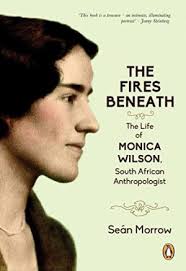
download

I’ll be back next week with a review.
Speaking my mother tongue…

I absolutely loved this article… https://wordpress.com/read/blogs/38230437/posts/4976

The young woman gave several reasons why she is not as proficient in her ‘mother’ tongue as people feel she should be.

I am also the recipient of this questioning. I just learned to speak in chiChewa: one of Malawi’s two official languages, the other being English.

I technically grew up bi-lingual. My mother spoke chiChewa around the house although her native tongue is chiYao. My father, who hails from Northern Malawi, spoke chiLambya, a distinct dialect of Chitipa. To this day, I can’t speak more than a few words of chiLambya. But chiChewa was spoken to me regularly only by my mother. My dad only spoke to us in English.

I had a reasonable comprehension of chiChewa growing up. And I used to easily distinguish between chiYao, chiChewa, chiTumbuka, and chiLambya–the languages most frequently spoken in my house–until I moved out on my own and left for university. Since the age of 18, I have been disconnected from my linguistic exposure. Once kids start school, particularly in English-medium, they can often lose a connection to the language. I used to envy my Spanish speaking friends in America because there was much more exposure to the language including radio, TV and newspapers. As for chiChewa, for most of my childhood, only 8 families I knew growing up were Malawian.

At age 34, I moved back to Malawi. I still struggle to speak but my comprehension is damn near on point now. Shyness is 100% of my hindrance. Malawians are quite rough with native non-speakers of chiChewa and would rather mock rather than assist. But I carry on and I hope by the end of this year to reclaim the title of fully-bilingual speaker of both English and chiChewa.

Children’s Hope Malawi

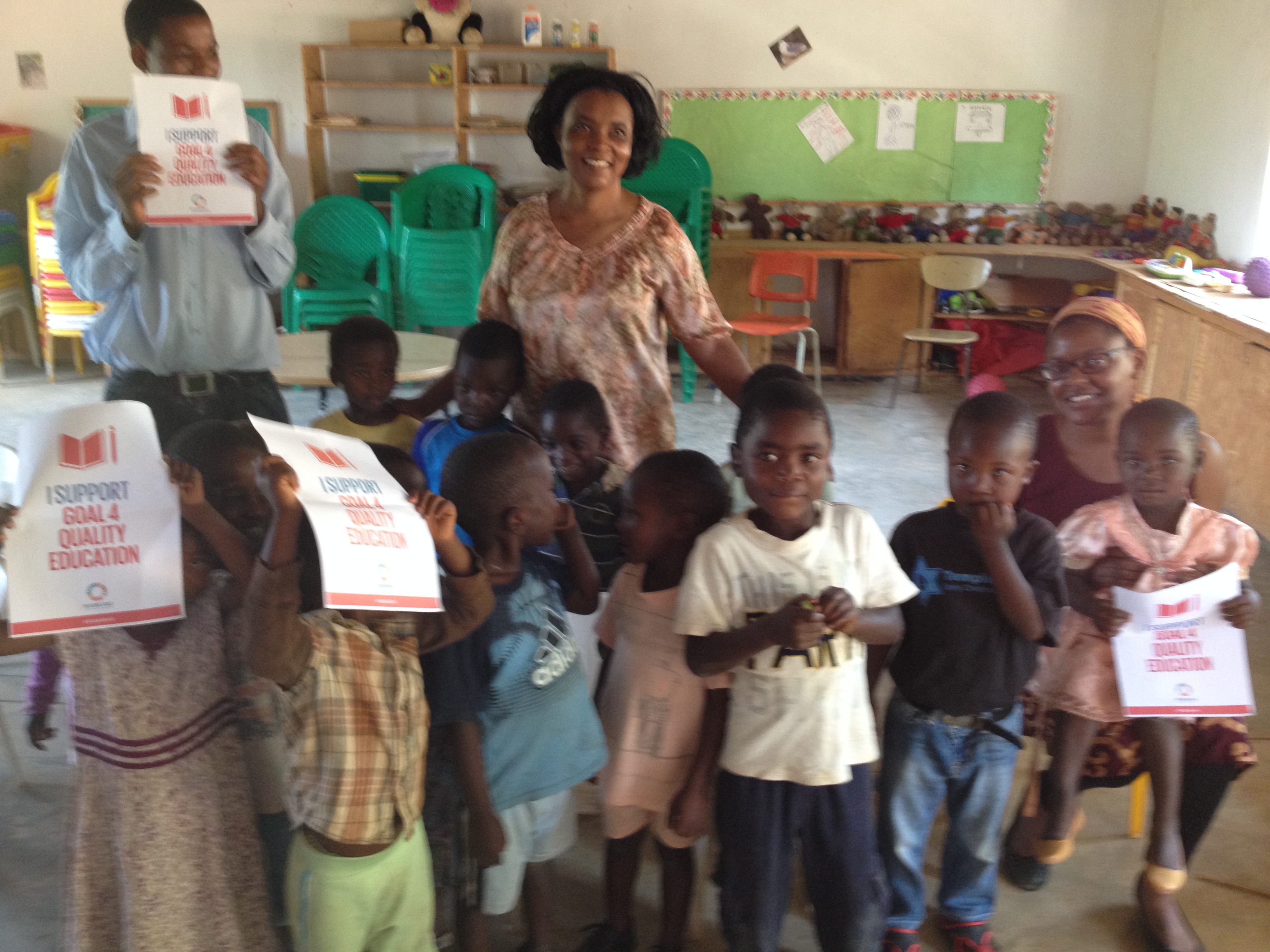
This week the UN ratified 17 goals to end poverty and promote education worldwide. While debates rage on in regards to who is going to fund this initiative, eager people across the world took part in an online declaration to do our part to end poverty. My mother founded an NGO called Children’s Hope Malawi. It started off as an organization called Mtogolo Village Community Based Organization (Mtogolo Village is a collection of villages in the Malemia district in Domasi, Zomba).

This organization started simply with an early education childhood development centre and is slowly developing into much more. With adequate funding and directives, we are hoping to build a self-sustainable model by 2019 so that the initiatives will be self-funded through income generating activities.

Today we gathered with the children to take a picture and unite with the Twittersphere in solidarity in the hope that we can achieve this goal. IMG_4971

Old Blog, New Blog

I’ve decided to retire my old medical humanities blog and merge it with this one. I liked the idea of having two separate blogs, one where I could articulate my thoughts on issues relevant to the medical humanities and the other where I could talk crap and reminisce about my old favorite shows like the 1990s teen soap gem, Passions.

But I found myself constantly ‘purifying’ both, deleted posts mostly from this one and then maintaining the medhums one. But my login email from the other blog was retired before I got a chance to designate a new address for it.

So I’ve decided to retire the other one and post everything on this blog. For future reference, the old link is here: https://chisomokcl.wordpress.com

Caring for the future

So the PhD is done. Graduation happened. I was stunned and by the tremendous showing of support of my family who came together from far and wide to celebrate the day (22nd July at the Barbican Centre in London). I have lived in solitude for more than 2 years now trying to finish this beast and am now trying to reintegrate myself into the world again. It’s not easy but I’m getting better at it. Being sociable used to be natural and now it is so foreign! Therefore, it was important to have people come and stand by me even though I haven’t been by them for years.

Also, I was very lucky to immediately commence work after graduating. I’ve accepted a research fellowship at IASH, Institute for Advanced Studies in the Humanities at the University of Edinburgh in Scotland. I will be looking at Church of Scotland records from its medical missionaries and nurses in British Central Africa Protectorate/Nyasaland/Malawi. Through my project, I am trying to understand the human response to illness. I’m particularly interested in Malawi so I’m going way back to the first meeting of the missionaries and the indigenous tribes. I’ll be looking at the first written documentations of both Western biomedical and traditional healing practices. I’d like to investigate what led to Malawi’s dire present state of medical service by taking part of the university’s ‘Caring for the Future Through Ancestral Time’ project (more info here: http://ancestraltime.org.uk/about-the-project/).

Up front, I’m relatively jovial but in solitude I am deeply concerned with affairs of the world. I am a card-carrying humanist and am also concerned about environmental sustainability, particularly through access to health care for everyone. These issues fuel my research interests. 

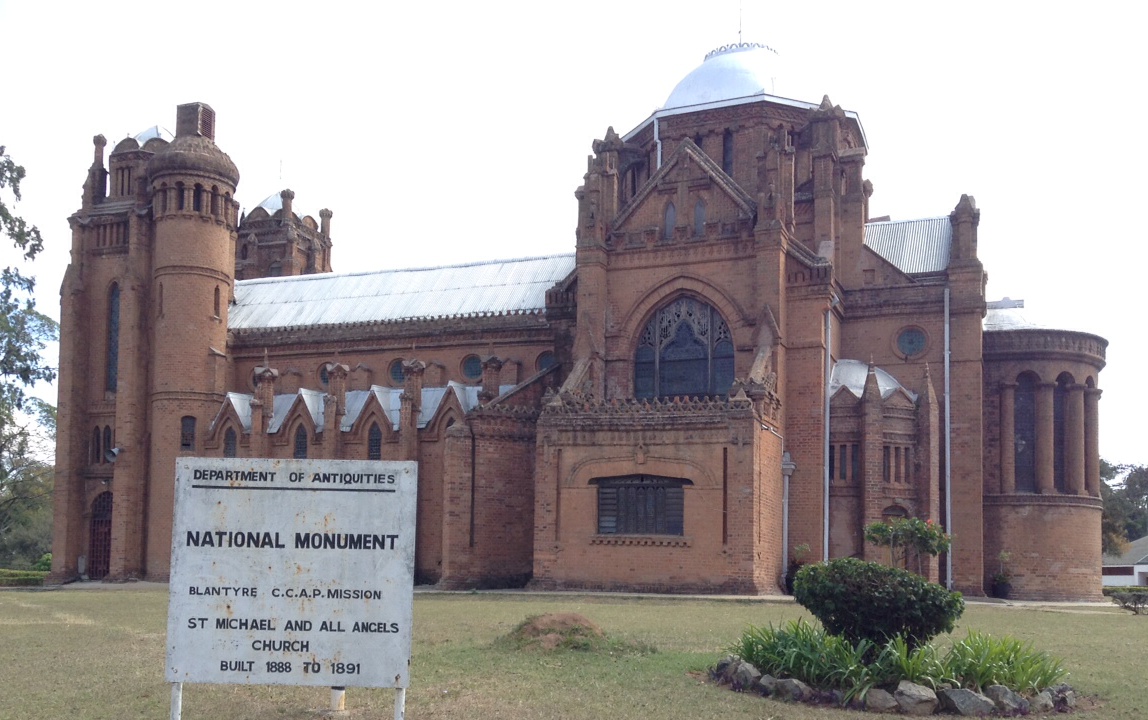
So I’m in Malawi now, just doing some prep work on what has to be done, collecting data and visiting necessary archives. Here is a picture of Malawi’s beautiful church, which was one of the first in the count. I’ll be working nearby in their archives in December. 

Blantyre CCAP Mission 

I’ll also spend some time canvassing the archives at the Society of Malawi library which is located on the top floor of the Mandala house building another historical site in Blantyre. Then of course there are the Malawiana room archives at Chancellor College, part of the University of Malawi and I’ll be making a special trip to Livingstonia, the site of the first Church of Scotland mission to Malawi. 

Celebrities and their Anti-vaccination opinions….

This week both Jenny McCarthy and Kristin Cavallari, two starlets whose work I am almost entirely unfamiliar with, came under fire this week for their anti-vaccination stances. McCarthy’s assault was more innocuous, she posed a simple question on Twitter asking her fans what they seek in a partner using the #AskJenny hashtag. She was bombarded with an assault on her maligned position that links autism to vaccinations. Cavillari, I must say, was a bit more sweet in her approach asserting that she was ‘just a mom trying to make the best decisions for her kids’ to justify her refusal to vaccinate them. She cited grossly outdated ‘research’ and ‘books’ (no further articulation was provided) that establish a causal relationship between childhood vaccinations and autism. 

I normally avoid as much celebrity news and gossip as I can; however, I always pay attention to such stories when celebrities attempt to engage their fan-base with pseudoscience and cannot fathom the scathing condemnation they face from actual medical professionals who rebut their nonsense with actual knowledge. In response to these celebrity positions, one doctor offered his position. “Of course, every parent wants what is best for their own children,” said Donald Burke, M.D., dean of the University of Pittsburgh Graduate School of Public Health. “But failure to vaccinate children against preventable contagious diseases puts not only their own children at risk, but it increases the risk of epidemics for everyone.” [Read more: http://www.chicagotribune.com/health/chi-cavallari-vaccinate-children-20140319,0,484158.story#ixzz2wXmGANhX%5D Thank you, Dean Burke! This should be end of story, but alas it is not. 

I am a researcher in the medical humanities, a field of studies that seeks to understand how the humanities as a discipline informs the study of medicine and vice versa. I am not a medical doctor but I do have a doctorate which focused on the literary approach to the medical humanities. And in my research, I asserted that the practice and understanding of medicine is intrinsically inseparable from culture. I believe that the anti-vaxxer position is inspired by a well-meaning (though thoroughly uninformed) initiative to confront the culture of big-pharma, the sheer lobbying power of the pharmaceutical industry in the United States. However, in the rejection of this legitimately powerful lobby they have run into the arms of the big placebo, a renewed faith in pseudoscience based in the rejection of clinical medicine. So we’re at a crossroads. How do we encourage parents to make the best decisions for their kids that are informed by accurate, credible studies? 

On the passing of the Iron Lady

On the passing of the Iron Lady

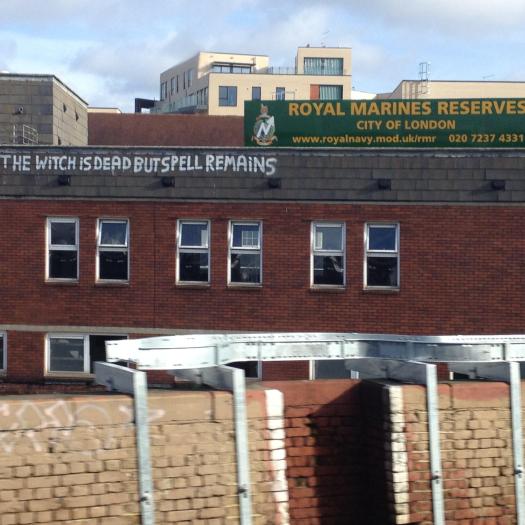
I frequently pass by this graffiti sprayed onto a warehouse conversion en route to London Bridge. I often wonder about its messenger specifically whether (s)he feels despondent about the future of England or if this is symptomatic of general London pessimism.